
LEVERAGE · Oregon consumer guides
My car is totaled.
What do I do now?
A clear starting point for Oregon drivers: protect your records, understand the offer and avoid expensive surprises while you decide what comes next.
200-plus five-star reviews · We work for you, not the insurance companies.
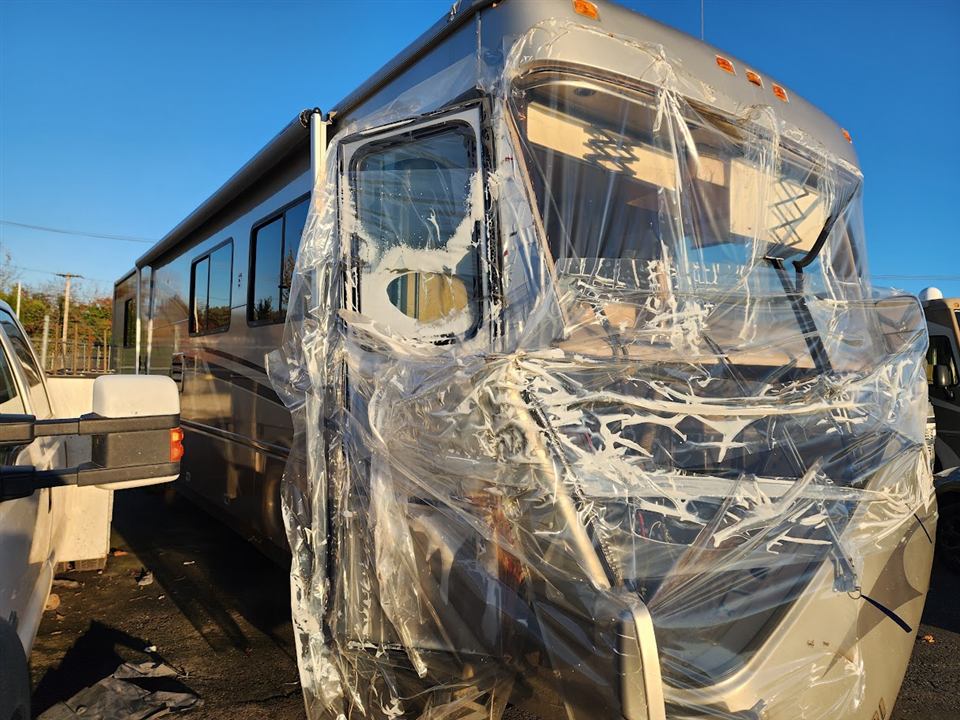
Your first priorities: the vehicle, the paperwork and the deadlines.
A total loss can leave you without transportation while you are trying to understand an unfamiliar report. Take one decision at a time. Save the facts now so you do not have to reconstruct them later.
Confirm the next move
Ask where the vehicle is, who can authorize its release and when storage or rental payment stops.
Save your records
Keep photographs, the written offer, the full valuation and receipts. Retrieve belongings when access is authorized and safe.
Pause on the number
Compare the report with your actual vehicle before deciding whether the offer is supported.
Whose insurance is paying?
My insurance
Your own policy is the starting point for appraisal-clause help. You need the coverage that applies to the loss: collision for a covered crash, or comprehensive for a covered theft or other comprehensive loss. Your policy must also provide an appraisal route.
Send the policy provision and the full valuation. We check the assignment before you hire us. Appraisal addresses vehicle value; it does not decide fault or create coverage.
Someone else’s insurance
You cannot invoke the other driver’s appraisal clause. LEVERAGE can provide an independent appraisal report for a third-party claim, but we do not provide one-on-one claim support, negotiation, or claim handling for that claim.
If you have applicable coverage on your own vehicle, ask your insurer about using it. A claim under your own policy is a separate route, with its own deductible and terms.
I’m not sure
Look at the company issuing the offer, then confirm whether you are claiming under your own policy or against another driver. The other driver being at fault does not, by itself, identify which policy is paying.
Send the offer with your free review request. Tell us who insured your vehicle and who sent the valuation.
From “totaled” to a decision.
Understand what the total-loss decision means.
The insurer is treating the vehicle as a total loss rather than funding a conventional repair. Ask for its written explanation. The damage estimate, the vehicle’s pre-loss value and the settlement calculation answer different questions.
Review the pre-loss vehicle value.
The important question is the value immediately before the loss. Start with the complete report, then compare its description and market evidence with your vehicle. Your loan balance and the price of your preferred replacement are not, by themselves, proof of that value.
Check the payment breakdown and your lender.
Ask for a line-by-line explanation of the offered value, deductible, any salvage deduction and applicable fees. If there is a loan or lease, confirm who receives the payment and obtain a current payoff. A remaining balance may require a separate discussion with your lender or GAP provider.
Decide whether keeping the vehicle makes sense.
Before choosing owner retention, ask about the salvage deduction, title requirements, repair feasibility, future insurance and lender approval. A vehicle that starts or drives can still have serious safety issues. Get the applicable requirements before committing.
Resolve a value disagreement with evidence.
You do not need to identify every technical issue yourself. Send the report for a free Red Flag Review. We can explain whether the concern warrants an independent appraisal and which service fits the claim.
Do not let storage become the surprise expense.
Ask these questions today.
- What date and time does approved storage end?
- Will moving the vehicle preserve access needed for inspection?
- Who authorizes towing and what charges are approved?
- What is the rental return deadline, in writing?
- Who will receive title documents and the settlement payment?
Document the vehicle before access changes.
When it is safe and authorized, photograph equipment, mileage, condition and belongings. Do not enter a damaged vehicle or restricted salvage area without permission. Ask whether LEVERAGE’s proprietary InspectIRL guided photo process is suitable for your assignment.
Questions after your car is totaled.
What if my car was stolen?
Ask which comprehensive coverage applies and gather pre-theft photographs, equipment records, keys and requested theft documentation. If the vehicle is recovered, follow the insurer’s and authorities’ instructions about access and ownership. Valuation and coverage are separate questions.
What if I already received a payment?
Send the payment letter and any signed release along with the valuation. Whether further action remains available depends on what was paid and agreed. Do not assume every payment ends the dispute or that every closed claim can be reopened.
How much does LEVERAGE charge?
Your Red Flag Review is free. Appraisals start as low as $399. We quote the assignment and flat fee before you hire us; we do not charge a percentage of your increase.
Can I recover my appraisal cost in Oregon?
For an eligible own-policy appraisal, Oregon requires reimbursement of reasonable appraisal costs when the final appraisal decision exceeds the insurer’s last offer made before the appraisal costs were incurred. Keep the final valuation, last offer and paid invoice. Ask us about documenting the reimbursement request.
Today’s decisions can cost more than tomorrow’s argument.
Find the vehicle
Get the yard or shop name, release requirements and daily storage rate in writing.
Save your evidence
Arrange safe access for photographs, belongings and inspection before the vehicle moves or is sold.
Get the dates
Ask for the last authorized storage day, last rental day and next claim action. These are separate deadlines.
If your car is still drivable, that does not establish that it is safe or that the insurer must repair it. Ask for the repair estimate, any supplements, the valuation and the reason for the total-loss decision. Oregon DMV title rules and an insurer’s economic decision are related but are not the same calculation.
Do not stop making loan payments simply because the vehicle is totaled. Ask the lender for a payoff good through a stated date and ask any GAP provider about its claim requirements. A valuation dispute does not suspend the finance contract.
Three Oregon protections worth understanding.
The report behind the offer
ORS 742.554 requires the valuation or appraisal reports relied on for the total-loss cash offer, along with the required notice. Ask for every page and each revision. This applies to an insured or a third-party vehicle owner; receiving a report does not create a right to invoke someone else’s policy.
The amount that is not in dispute
Under ORS 742.558, payment of the undisputed vehicle value requires agreement to execute ownership-transfer documents and authorization for an insurer-paid move to a disclosed location. The vehicle must remain available there for inspection and evaluation for at least 14 calendar days. After that period it may be sold for salvage. Acceptance of that statutory payment alone does not waive the additional value claim. Read any separate release before signing; arrange inspection promptly.
Reasonable appraisal-cost reimbursement
ORS 742.466 requires reimbursement of reasonable appraisal costs when the policy provides appraisal and the final appraisal decision exceeds the insurer’s last offer made before the costs were incurred. The law does not require a $1,000 increase. It does require the applicable conditions and reasonable costs. Keep the last offer, award and invoice; do not assume this applies to a report purchased for a third-party claim.
Sources and useful documents
General information for Oregon vehicle owners. Your policy, coverage and claim facts matter. Coverage disputes and legal questions may require separate professional advice.
Get the Advantage. Get LEVERAGE™.
I Know the Tricks. I Know the Trade. I Know Who I Fight For.
We Fight for Oregon Consumers.
Send the report and tell us what does not look right. A free Red Flag Review helps you decide whether an independent appraisal is the next step for your vehicle.
Keep learning.
Choose another guide
- Dispute a Total Loss Settlement
- Oregon Appraisal Clause Guide
- Total Loss Valuation Report Guide
- State Farm Total Loss Appraisal Clause Disputes in Oregon
- Progressive Total Loss Appraisal Clause Disputes in Oregon
- GEICO Total Loss Appraisal Clause Disputes in Oregon
- Can I Reject a Total Loss Offer in Oregon?
- Total Loss Valuation in Oregon
- Fair Market Value vs. Appraised Value in Oregon
- Oregon Vehicle Valuation Evidence Worksheet
- Oregon Total Loss Storage Fees
- 20 Questions Before Hiring an Oregon Total Loss Appraiser
- Negotiate an Oregon Total Loss Claim Yourself
- How to Improve Your Oregon Total Loss Settlement With Photos
- I’ve Totaled My Car in Oregon: How Do I Get a Fair Settlement?
- Oregon Car Insurance Total Loss Claim Laws
- How to Dispute Total Loss Value in Oregon
- Oregon Total Loss Insurance Claims
- Total Loss Oregon: Understand Your Options

